Question thread #148
The rules:
- You may ask any dev-related question you have in a comment. (It doesn't even need to be about Dreamwidth, although if it involves a language/library/framework/database Dreamwidth doesn't use, you will probably get answers pointing that out and suggesting a better place to ask.)
- You may also answer any question, using the guidelines given in To Answer, Or Not To Answer and in this comment thread.
If I'm hoping, then I'm hoping for the frost
( And be the roots that make the tree. )
vital functions
Reading. I have FINISHED Index, A History of the (Dennis Duncan), including both indexes, including The Games Therein, and had a Great time.
Started (just now) The Rose Field, volume three of The Book of Dust (Philip Pullman). ( Grousing; vague spoilers for vol 2 )
so as I say I'm not hugely hopeful for this, but hey, maybe I'm being unfair to it.Writing. Did you know that getting knowledge out of your own head and into other people's is a specific set of skills that has very little to do with how well you know the things you're trying to communicate? TRY TO LOOK SHOCKED, PLEASE. (6.3k words, and am absolutely in an Iterative Cycle of trying to make the introduction more-or-less work. It is progressing, just... very slowly.)
Listening. I realised that Hidden Almanac was possibly in fact exactly a useful sort of thing to listen to while Wrangling Laundry, and have therefore started again from the beginning, at least in part as an attempt to actually listen to some of the episodes I dozed through while they were playing in the car...
Playing. Incomplete White Puzzle progresses. (Today I have added I think three pieces to the contiguous section, two of which I had already joined to each other as a free-foating lump, and made another couple of free-floating lump connections.)
I think we also did a bit more Inkulinati before I got horrendously distracted by Puzzle. And the sudoku fixation continues, though it is at least ramping down a little.
Cooking. I have been having A Rough Week brain-wise, but I have today managed to make some bread, and I did earlier in the week gently fry up some celery and garlic to add to the mashed potato & parsnip that we were having with Vegetables and Veg Sossij. I think that is about the extent of it.
Eating. VEGETABLES, including a couple of peppers from an overwintered plant. (Restricted diet for a week up until the Tuesday just gone, so the return of Fibre was Extremely Welcome.) Favourite chocolate stars with raspberries. Fruit With Skin On. Lebkuchen. Stollen. Seeds and nuts.
Growing. I think the nematodes (applied as a split dose a few days apart) have dealt? at least temporarily? with the sodding Sciarid Flies? for now?
Lemongrass needs pricking out. Physalis are showing zero indication that they have any intention of germinating, which is mildly annoying. There are still three not-dead Lithops seedlings, though I doubt they're the same three as last week. Orchids getting increasingly enthusiastic about their plans to flower.
Have not managed to get anything else sown, yet.
Observing. Lots of bulbs: daffodils and crocuses various and snowdrops are Definitely Underway, at this point. We are fairly convinced that the Yelling from the garden around dusk is Amorous Foxes, though we have not (yet?) bestirred ourselves to ask the internet if what we think we're hearing is in fact what we're hearing...
[navel-gazing] reading, fast & slow
At some point in proceedings (depression? pain? migraine? dense technical text for the PhD? poetry?), I realise, I have gone from reading Unusually Quickly to still reading More? Than Population Norm? (75ish books last year, of which 15ish were graphic novels or otherwise not-a-novel's-worth-of-words), but no faster than I'd be able to read the text aloud -- "hearing" each word in my head, and often rereading sentences repeatedly.
This is in contrast to how I type, which is much faster than I can speak comprehensibly (... though I now recall that I am in fact often asked to Slow The Fuck Down when providing information verbally).
I have over the last little bit been tentatively experimenting with trying not to read each word "aloud", mentally, and instead treating The Written Word as something that doesn't always need to be (pseudo-)vocalised.
It feels weird. It's an active effort. I am extremely dubious about the impact on how much information I retain; Further Study Required. I think this is probably how I used to read (when?); I'm not sure what changed; I'm unsettled.
(And I want to post something to Dreamwidth before bed, and this is a thing I was thinking about a lot while almost-but-not-quite finishing Index, A History of the -- I'm at a point I'd ordinarily count as "finished" but obviously it is in this instance both important and rewarding to read the index, all two of it, so here y'go.)
Font Woes; Help?
And I CANNOT FOR THE LIFE OF ME get my computer to see that. At first, it insisted they were two completely different, unrelated fonts, so I popped them into FontForge, renamed them to have the same family and named one Hershey Noailles Old French with weight Regular and the other Hershey Noailles Old French Bold with weight Bold. That at least got my computer to go, "Ah, I see, these are indeed the same family, one is bold and one is regular!" which is great... but now my computer insists that the two fonts are identical. I do not know why, they very clearly are not when I open them individually in Font Forge... but they show up as identical in Font Viewer too! And any time I try to use it, I get the bold face, and I cannot get the regular one.
I am giving up for now but ARGH. (And all of this could've been avoided if the font distributor had just NAMED THEM RIGHT IN THE FIRST PLACE!)
preposterous puzzle: thoughts so far
The context is Simone Giertz's Incomplete White Puzzle, which A got me partly to troll me and partly because they thought I'd enjoy it and partly because getting the bundle of all three puzzles gets you 20% off individual list prices.
Current status: 105/"500" pieces in their final positions, plus another 57 no longer singletons. I have several semi-sorted categories including (in the halves of the box) "could plausibly have come from a reasonable puzzle" and "bullshit", and (on the table) Swoopy Bullshit, Offset Noses, Weirdly Straight, Multi-Nose Bullshit, and Featureless Curves.
( THOUGHTS )
I am having a very pleasant and soothing time, and I am trying to break up the hyperfocus by instituting a rule of Get Up And Do One Unit Of Something Else After Every (Contiguous) Piece Placed, and yes that is me rules-lawyering after the fact...
There's no boat to take me where all the stars go to cross the water
( I caught the stone that you threw. )
I can tell that my ability to think in media is reviving because in twenty-six years it had never occurred to me to fancast Stefan Fabbre and all of a sudden I thought that, fair-haired, dry-voiced, the moody, unsteady one in the family, in 1976 he would have been in Clive Francis' wheelhouse.
Come To My Window

bein' 'spended's no big deal
some good things
- some washi tape I wanted has restocked at a UK retailer! Possibly a second one also! So as and when the website works out what's going on with Desired Tape #2, it is time to place a stationery order for meeeeeeeeeeeeeee
- Progress With Preposterous Puzzle! I now have all the edge assembled (I think I wound up with only one piece having been Actually Wrong) and even I have managed to start filling in very slowly (I am up to... about 5 pieces placed so far? which is a further 1% down!)
- I got a hug from the Child while saying goodbye this evening!
- I have worked out an acceptable Wagamama order from the current menu and am feeling pretty good about my dinner.
- Bread for tomorrow (anise, fig, hazelnut, copied from the local fancy bakery) is looking Extremely Promising.
Once you know it's a dream, it can't hurt
Optioned by Columbia before it was even published, Millard Lampell's The Hero (1949) was a mythbuster of a debut novel from an author whose anti-capitalist, anti-fascist, pro-union bona fides went back to his undergraduate days and whose activism had already been artistically front and center in his protest songs for the Almanac Singers and his ballad opera with Earl Robinson. The material was personal, recognizably developed from the combined radicalization of his high school stardom in the silk city of Paterson and his short-lived varsity career at West Virginia University. Structurally, it's as neat and sharp as one of his anti-war lyrics or labor anthems, sighting on the eternally shifting goalposts of the American dream through the sacred pigskin of its gridiron game. Like a campus novel pulled inside out, it does not chronicle the acclaim and acceptance found by a sensitive, impressionable recruit once he's played the game like a Jackson man for his alma mater's honor and the pure love of football, it leaves him out in the cold with a shattered shoulder and ideals, assimilating the hard, crude fact that all the brotherly valorization of this most patriotic, democratic sport was a gimmick to get him to beat his brains out for the prestige and profit of silver-spooned WASPs who would always look down on him as "a Polack from a mill town" even as he advertised the product of their school in the hallowed jersey of their last doomed youth of an All-American. Beneath its heady veneer of laurels and fustian, football itself comes across as a grisly, consuming ritual—Lampell may not have known about CTE, but the novel's most significant games are marked by dirty plays and their gladiatorial weight in stretchers. It goes without saying that team spirit outweighs such selfish considerations as permanent disability. The more jaded or desperate players just try to get out with their payoffs intact. "I was only doing a job out there. I got a wife and kid, I was in the Marines three years. I needed the dough, the one-fifty they offered for getting you out of there." None of these costs and abuses had escaped earlier critiques of amateur athletics, but Lampell explicitly politicized them, anchoring his thesis to the title that can be read satirically, seriously, sadder and more wisely, the secret lesson that marginalized rubes like Steve Novak are never supposed to learn:
"Of all the nations on earth, it seems to me that America is peculiarly a country fed on myths. Work and Win. You Too Can Be President. Bootblack to Banker. The Spirit of the Old School. We've developed a whole culture designed to send young men chasing after a thousand glistening and empty goals. You too, Novak. You believe the legend . . . You've distilled him out of a thousand movies and magazine stories, second-rate novels and photographs in the advertisements. The Hero. The tall, lean, manly, modest, clean-cut, middle-class, Anglo-Saxon All-American Boy, athletic and confident in his perfectly cut tweeds, with his passport from Yale or Princeton or Jackson . . . To be accepted and secure; to be free of the humiliations of adolescence, the embarrassment of being Polish or poor, or Italian, or Jewish, or the son of a weary, bewildered father, a mother who is nervous and shouts, a grandfather who came over from the old country . . . You have to learn to recognize the myth, Novak. You have to learn what is the illusion, and what is the reality. That is when you will cease being hurt, baffled, disillusioned by a place like this. You won't learn it from me. You won't learn it from a lecture, or a conversation over teacups. But you'll have to learn."
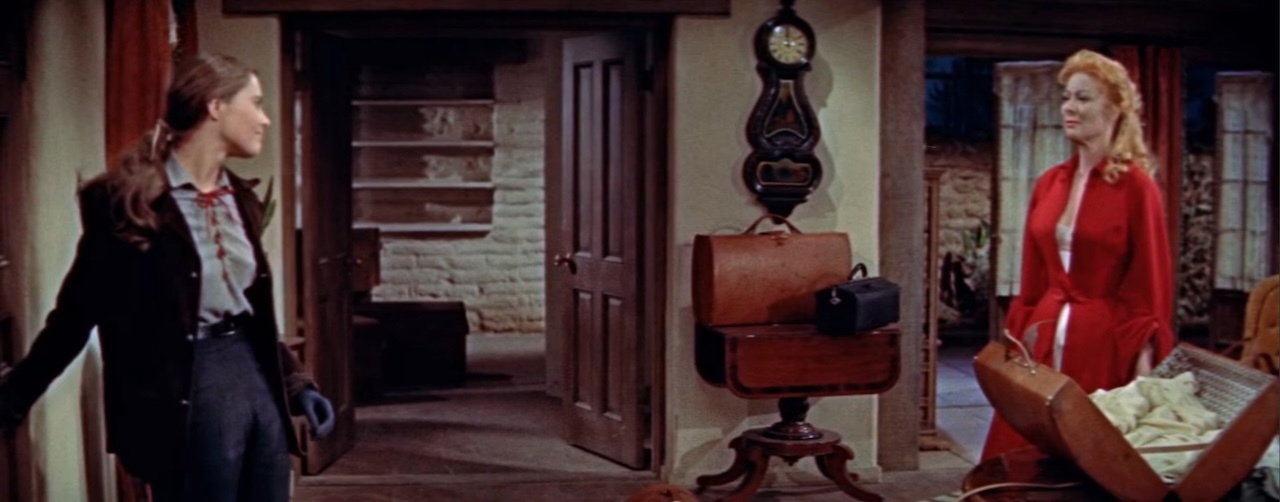
Almost none of this mercilessly articulated disenchantment can be found in the finished film. Co-adapted by Lampell with writer-producer Sidney Buchman and chronically criticized by the PCA, Saturday's Hero sticks with melodramatic fidelity to the letter of the novel's action while its spirit is diverted from a devastating indictment of the American bill of goods to the smaller venalities of corruption in sports, the predatory scouts, the parasitic agents, the indifferent greed of presciently corporatized institutions and the self-serving back-slapping of alumni who parade their sacrificially anointed mascots to further their own political goals. It's acrid as far as it goes, but it loses so much of the novel's prickle as well as its bite. Onscreen, old-moneyed, ivy-bricked, athletically unscrupulous Jackson is a Southern university, mostly, it seems, to heighten the culture shock with the Northeastern conurbation that spawned Steve's White Falls. In the novel, its geography is razor-relevant—it decides his choice of college. Academically and financially, he has better offers for his grades and his talent, but its Virginian mystique, aristocratically redolent of Thomas Jefferson and Jeb Stuart, feels so much more authentically American than the immigrant industry of his hardscrabble New Jersey that he clutches for it like a fool's gold ring. The 2026 reader may feel their hackles raise even more than the reader of 1949. The viewer of 1951 would have had to read in the interrogation of what makes a real American for themselves. The question was a sealed record in the McCarthy era; it was un-American even to ask. It was downright Communist to wonder whether what made a real hero was a gentleman's handshake or the guts to hold on like Steve's Poppa with his accent as thick as chleb żytni, who went to jail with a broken head in the 1913 silk strike and never crossed a picket line in his life. For Lampell, the exploitativeness of football could not be separated from the equally stacked decks of race and economics that drove students to seek out their own commodification. "It is a profound social comment that there are so many Polish, Italian, Jewish and Negro athletes. Because athletics offers one of the few ways out of the tenements and the company houses." The Production Code was a past master of compartmentalization, married couples placed decorously in separate beds. The football scenes in Saturday's Hero are shot with bone-crunching adrenaline by God-tier DP Lee Garmes as if he'd tacked an Arriflex to the running back and if the picture had been ideologically that head-on, it might have lived up to the accusations of subversive propaganda which the presence of class consciousness seemed to panic out of the censors. It feels instead so circumscribed in its outrage that it is faintly amazing that it manages the novel's anti-establishment, not anti-intellectual ending in which Steve, proto-New Wave, walks away from the gilded snare of Jackson determined to complete his education on his own terms even if it means putting himself through night school in White Falls or New York. As his Pacific veteran of a brother gently recognizes, in a way that has nothing to do with diplomas, "My little brother is an educated man." It's a hard-won, self-made optimism, surely as all-American as any forward pass. With the vitriolic encouragement of such right-wing organizations and publications as The American Legion Magazine (1919–), its even more expressly anti-Communist spinoff The Firing Line (1952–55), and the anti-union astroturf of the Wage Earners Committee, the movie after all its memos, rewrites, and cuts was picketed and charges of card-carrying Communism levied against writer Lampell, producer Buchman, and supporting player Alexander Knox.
Why pick on him? The blacklist had already won that round. For his prolifically left-wing contributions to the Committee for the First Amendment, Progressive Citizens of America, the Actors' Lab, the Screen Actors Guild, and the American Russian Institute, Knox had been named in Myron C. Fagan's Documentations of the Reds and Fellow-Travelers in Hollywood and TV (1950). By the end of that year, he had taken his Canadian passport and his family to the UK and returned to the U.S. only for the production dates required to burn off the remainder of his contract with Columbia. Since witch-hunts have by definition little to do with facts and everything to do with fear, the picketers didn't have to care so long as they could seize on his Red-bait reputation—The Firing Line would cherish a hate-on for him as late as 1954—but it remains absurdly true that at the time when Saturday's Hero premiered, he was living in London. His name had been insinuated before HUAC as far back as the original hearings in 1947. Harry Cohn might as well have rolled his own with those memos and let Knox give that broadside denunciation of the great American myth.
Fortunately, even a truncated version of Professor Megroth of the English Department of Jackson University is an ornament to his picture, no matter how irritably he would wave it off. Plotwise, the character is strictly from cliché, the only adult on campus to bother with an athlete's mind instead of his rushing average and return yards, but Knox makes him believable and even difficult, the kind of burnt-out instructor who makes sour little asides about the tedium of his own courses and plays his disdain for sportsball to the cheap seats of his tonier students as a prelude to putting the blue-collar naïf he resents having been assigned to advise on the spot. Can I find a hint that Knox ever played Andrew Crocker-Harris in his post-American stage career? Can I hell and I'd like to see the manager about it. Like the subtly stratified fraternity houses and dorms, he looks like just another manifestation of the university's double standards until Steve goes for the Romantic broke of quoting all forty-two Spenserian stanzas of "The Eve of St. Agnes" and the professor is ironically too good a sport not to concede the backfire with unimpeachable pedantry. "You don't understand, Novak. You're supposed to stand there like a dumb ox while I make a fool out of you." His mentorship of Steve is mordant, impatient, a little shy of his own enthusiasm, as if he's been recalled to his responsibilities as a teacher by the novelty of a pupil who goes straight off the syllabus of English 1 into Whitman and Balzac and Dostoyevsky as fast as Megroth can pull their titles off the shelves, making time outside his office hours—in a rare note of realism for Hollywood academia, he can be seen grading papers through lunch—in unemphasized alternative to the relentless demands of the team and especially its publicity machine that eat ever further into its star player's studies and, more fragilely, his sense of self. "You know, if you continue in this rather curious manner, I may be forced to give you quite a decent mark. Be a terrible blow to me, wouldn't it?" That it doesn't work is no criticism of Megroth, who is obviously a more than competent advisor once he gets his head out of his own classism. As he would not be permitted to point out on film, it is hideously difficult to deprogram a national freight of false idols, especially after eighteen years of absorbing them as unconsciously as the chemical waste of the dye shops or the ash and asbestos fallout of the silk mills. He can talk about truth, he can talk about self-knowledge; he can watch horrified and impotent from the stands of a brutal debacle as it breaks his student across its bottom line. He would have played beautifully the quiet, clear-eyed conversation that the PCA rejected as "anti-American." Barely a line remains, cut to shreds, perhaps reshot: "The dream, the dream to be accepted and secure . . . Once you know it's a dream, it can't hurt." Professor Megroth says it like the only thing he has left to teach the still-raw Steve, whom even a joke about industrial insurance can't persuade to stay a second longer at Jackson than it takes him to pack. Alex Knox would revisit the U.S. only once more in 1980, thirty years after it had chased him out. When he began to be offered parts in American pictures again, he would take them if they were internationally shot.
"One way that fascism comes," Millard Lampell wrote as a senior at WVU in 1940, "is by an almost imperceptible system of limitations on public liberty, an accumulation of suppressions. The attack on civil liberties is one invasion the United States army can't stop. The only safeguard of democracy at the polls is the determination of the people to make it work." Boy, would he have had a lousy 2024. He didn't have such a good 1950, when he was named in the notorious Red Channels: The Report of Communist Influence in Radio and Television and in short order vanished from American screens until the 1960's. Sidney Buchman followed much the same trajectory, starting with his refusal to name names before HUAC the same month that Saturday's Hero opened. Since he was encouraged to write one of those confessional letters clearing himself of all Communist sympathies, I am pleased to report that Alexander Knox completely blew it by digressing to castigate the House Un-American Activities Committee for exactly the kind of lawless groupthink it claimed to have formed to root out, which he was unsurprisingly right damaged far more of America's image on the world stage than a couple of socially progressive pictures. Is there an echo in here? The blacklist passed over the majority of the remaining cast and crew—veteran direction by David Miller, a journeyman score by Elmer Bernstein, and effective to exact performances from John Derek, Donna Reed, Sidney Blackmer, Sandro Giglio, Aldo Ray, and no relation Mickey Knox—but even the topical boost of a series of college athletics scandals couldn't save the film at the box office. It was Red and dead.
"Athletics! No interest whatsoever in football, basketball, tennis, beanbag, darts, or spin-the-bottle." I have about as much feeling for most sports as Professor Megroth, but I learned the rules of American football because my grandfather always watched it, always rooting for the Sooners long after he had retired from the faculty of the University of Oklahoma. I would have loved to ask him about this movie, the sport, the politics; I would have loved to catch it on TCM, for that matter, but instead I had to make do with very blurrily TCM-ripped YouTube. The novel itself took an interlibrary loan to get hold of, never having been reprinted since its abridged and pulp-styled paperback from the Popular Library in 1950. It's such a snapshot, except the more I discovered about it, the less historical it felt. "I console myself," the novel's professor says, unconsoled, as he shakes hands for the last time with Steve, "with the thought that even if I had said all this, you would not have believed me. You would have had to find out." And then, just once, could we remember? This education brought to you by my curious backers at Patreon.
Autobio: Crazy Boys Get Money
Summary: Two teens in Texas hook and heist their way out of danger. True story.
Series: LB autobio (D Stories)
Word Count: 8100
Notes: Winner by a long shot of the February fan poll. Depending on how this story is received, I’ll be pulling out more regarding this period of my life, a series called “the D Stories.” Normally I would break it into 3 installments, but due to the nature of the content, I have chosen to upload it all at once. I feel professionally obligated to disclaim that this story is not appropriate for anyone under 18… but this was my life when I was younger than that, and it's both insulting and degrading to say that my youth is unspeakable to the very age demographic it happens to.
Content warnings for anti-black racism; coerced, underaged, bad sex work, and (separate) consensual, okay teenage sex, along with the circumstances surrounding both. More information is in the comments.
Let the lights run like rivers all over my skin
( So I break every mirror to see myself clearer. )
I seem to have missed Candlemas this year, so have a belated invocation to Brigid: Emma Christian, "Vreeshey, Vreeshey." The temperature rose to just freezing this afternoon and a whole shelf of snow-crust calved off the roof onto the front steps.
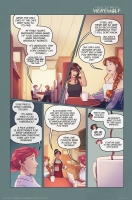
How to Be a Werewolf - Surprise! It's family movie night as of now
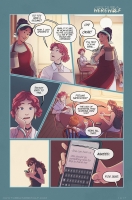
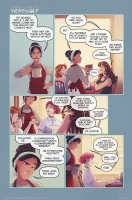
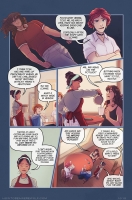
New comic!
Vote over on TWC to see Vincent being unamused
Follow me on Blue Sky if you're so inclined!
COME SEE ME ON SATURDAY (FEB 7TH) AT NWI COMIC CON IN CROWN POINT, IN IF YOU LIVE NEARBY!
Part of why I wanted to work on this side comic first was because I need to bring the idea back around that everyone needs to...like, take initiative here, basically. Poor MarMar are sharing their house with not just Elias, but also Ginger and Aubrey, and it's just a little too crammed with people. Elias has been sleeping on the couch since Ginger was liberated, which has been at least two, maybe three months? Marin and Marisa are mostly over trying to force the situation to resolve, because they're old enough to know that Elias needs to move out on his own of his own accord lol
Anyway, we're back to our regular schedule! I've got seven total pages of this side thing, and then the chapter cover, and then we'll dive into Chapter 14 for reals. I know I've said it's the last chapter a lot, just to give everyone time to process that, but assume it'll still take me a few years to finish lol.
In the meantime, please follow/support me on Patreon if you'd like to see art that I'm working on ahead of time, because that is mostly what I'm doing with my time off anyway. You can also download the Volume 1 ebook and the Kickstarter digital artbook, plus see whatever I'm working on ahead of time.
-----------------------------------------------------------------------------------------------------
Tote bags, hoodies, tshirts, prints and mugs are all available in the Hivemill store! The hoodies are unisex sizing, but the tshirts run rather fitted, so I recommend sizing up! Book 1 is available in paperback and ebook format, as well as the merch from the Kickstarter :).

HTBAW Fandom Wiki is up and running! Thanks to Myk Streja and ShitaraRen for tons of help with moderation efforts and everyone else who's done a ton of work on adding information and filling out the Wiki. Thank you everyone for contributing and it's an amazing and super detailed resource!
Feel free to check out my goofy Amazon store if you're so inclined, or even if you don't need anything from my shop, just using this link will earn me a small commission from things you buy on Amazon regardless of what it is (this is an ad, as I get a tiny commission if you do buy something)! Thanks to everyone who's come out to support me through Ko-fi and Patreon!
Minor operations; testing new serving path
Hi all!
I'm doing some minor operational work tonight. It should be transparent, but there's always a chance that something goes wrong. The main thing I'm touching is testing a replacement for Apache2 (our web server software) in one area of the site.
Thank you!